TL;DR:
A home addition expands your existing house into one larger residence. An ADU creates a fully independent second dwelling on your lot with its own kitchen, bathroom, and entrance. Additions make sense when you need more personal living space and have no interest in rental income. ADUs make sense when your goals include rental income, multigenerational housing with privacy, or long-term property value growth. In Jerome and Burley, zoning rules differ between city and county jurisdictions, and Cassia County requires a minimum one-acre lot for any dwelling in unincorporated areas. Both options require a feasibility check before you invest in design.
What Actually Separates an ADU from a Home Addition
A home addition is exactly what it sounds like. You expand your existing house by knocking out a wall, pouring a new foundation section, framing up new rooms, and tying everything into your current structure. The result is a bigger house, but it is still one residence with one address and one set of utility connections.
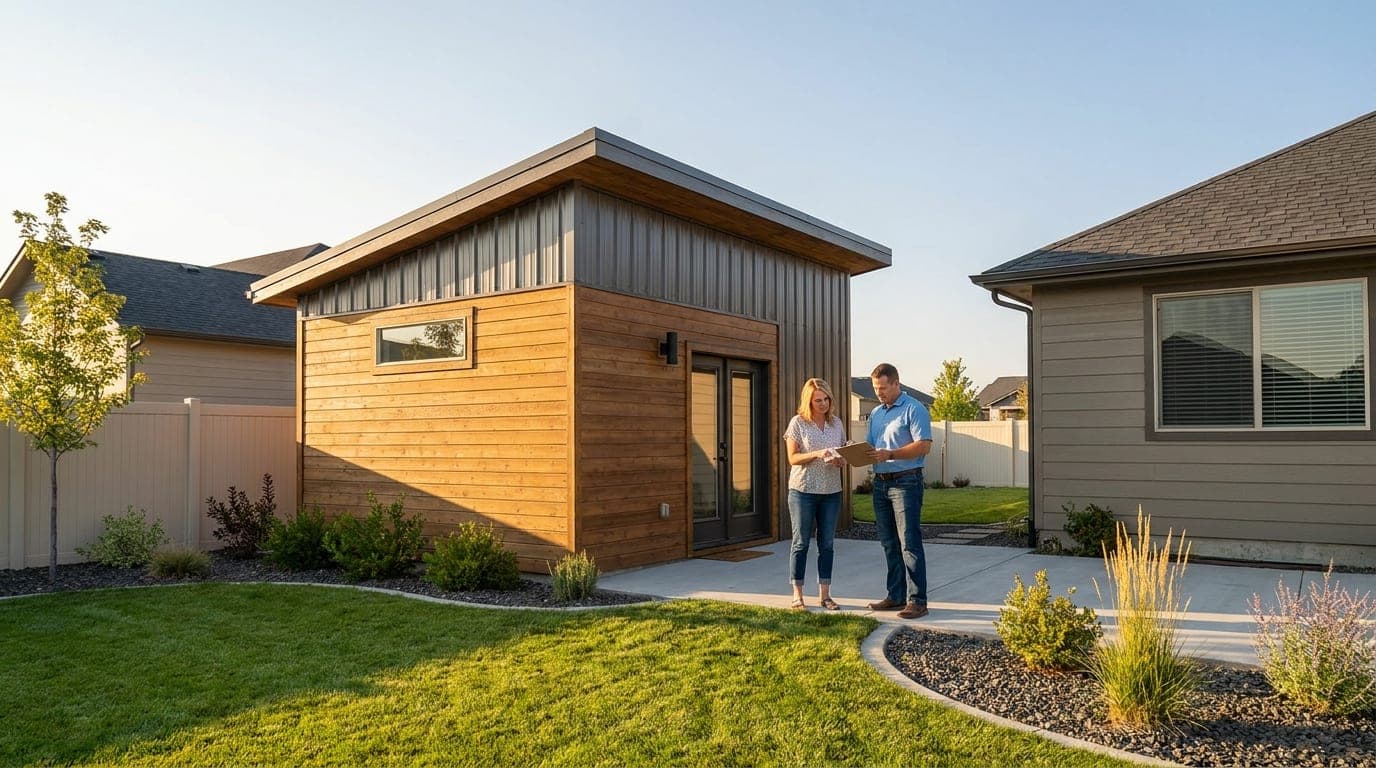
An accessory dwelling unit is a fully self-contained living space. It has its own kitchen, its own bathroom, its own entrance, and in most cases its own utility connections. It can be attached to your home, sit above your garage, or stand completely separate in your backyard. Legally and functionally, it operates as a second residence on your property.
That distinction matters enormously when it comes to financing, permitting, property taxes, and your long-term options as a homeowner.
When a Home Addition Makes More Sense
A home addition deserves serious consideration when you need more living space for your own household and have no interest in housing someone independently or generating rental income.
Additions integrate seamlessly with your daily life. If you want a bigger master bedroom, an extra bathroom, a larger kitchen, or a family room, an addition gives you connected space that flows naturally through your home. You do not deal with a separate entrance, separate utilities, or the landlord responsibilities that come with a rental unit.
Additions also tend to be simpler from a permitting standpoint when your lot is tight. Both Jerome and Burley have setback requirements that govern how close any structure can sit to your property lines. On a smaller lot, an addition to your existing footprint may be the only realistic way to gain square footage without triggering the additional documentation that ADU permitting requires.
Based on typical Magic Valley projects, home additions in Idaho generally run $150 to $250 per square foot depending on complexity, finish level, and whether you are adding a bathroom or kitchen. A 400 square foot bedroom-and-bath addition might cost $60,000 to $100,000. That cost gets rolled into your home's value, but it does not generate income and it does not give you the flexibility to rent, sell separately, or house a family member with true independence.
One honest caveat: additions rarely add as much resale value per dollar spent as people expect. National data on home improvement ROI consistently shows that most remodeling projects recoup 50 to 80 percent of their cost at resale, depending on the project type and market. You are improving your home, but you are not creating an asset that operates independently.
An addition is likely the right call when your lot is too small to meet ADU setback or minimum size requirements, when you have no current or future interest in renting the space, when your primary goal is personal comfort rather than property income, or when your HOA prohibits detached or semi-detached secondary units.
When an ADU Is the Stronger Long-Term Investment
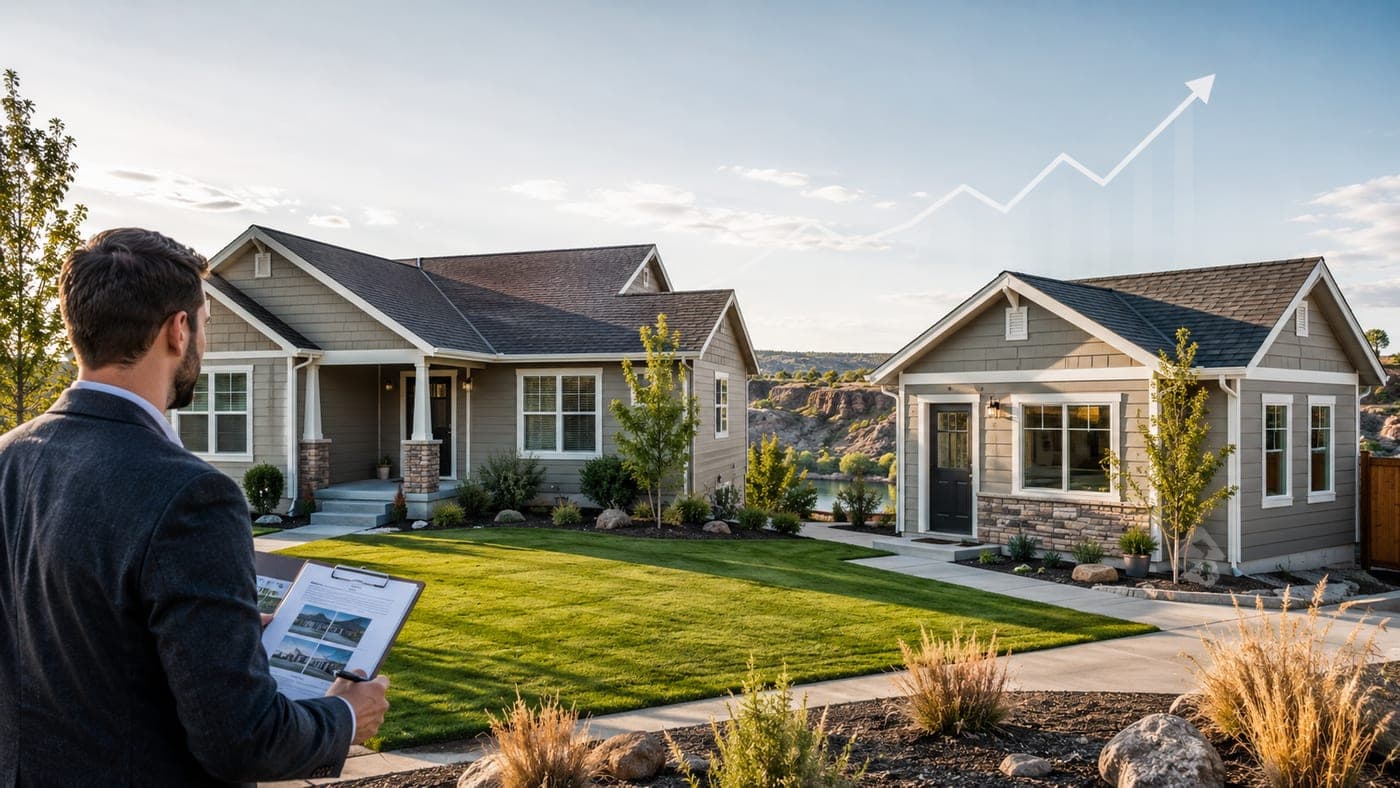
If your goals include rental income, housing a family member with privacy, or building equity through an income-producing asset, an ADU almost always delivers more financial value than an addition. This is especially true in the Magic Valley right now, where housing inventory remains tight and demand for smaller, affordable rentals is growing alongside Idaho's population, which grew faster than any other state from 2020 to 2025.
Current rental market data shows average one-bedroom rents in the Twin Falls area at approximately $1,110 per month. A 600 square foot detached ADU can realistically rent for $900 to $1,100, often enough to cover most of a construction loan payment from day one. That changes the financial math entirely. You are not just spending money on your property. You are building a revenue-generating asset.
A 2025 analysis by the Federal Housing Finance Agency examined California appraisal data from 2013 to 2023 and found that properties with ADUs recorded annualized appraised value growth of 9.34 percent compared to 7.65 percent for properties without. That is California-specific data and Twin Falls is a different market, but the directional finding, that ADU properties appreciate faster, is consistent with what appraisers and lenders observe across markets.
The American Planning Association notes that research to date does not support common fears about ADUs lowering property values or creating parking shortages, and that there are indications ADUs increase the supply of affordable housing and make meaningful economic contributions to their communities.
An ADU also gives you flexibility that an addition cannot. Need rental income now? Rent it. Parents moving in next year? Reserve it for them. Want to eventually downsize and move into the smaller unit yourself? That option exists. A home addition locks you into one use. An ADU keeps your options open.
A new ADU in the Magic Valley typically runs $120,000 to $220,000 for a site-built unit, depending on size and finishes, based on our project experience. Prefabricated units can come in lower and faster. The critical difference is that an ADU can start generating rental income immediately after completion, which fundamentally changes how you evaluate the cost.
The Permitting and Zoning Reality in Jerome and Burley
This is where things get genuinely local, and where the two jurisdictions differ in ways that affect your project.
Jerome. The City of Jerome updated its municipal code in 2025 to add specific ADU standards to its schedule of district regulations, including clear definitions distinguishing accessory structures (like shops) from accessory dwelling units. Because these rules are relatively new, homeowners should confirm current requirements directly with the Jerome Planning and Zoning office. Jerome city and Jerome County have different rules, so whether your property sits inside or outside city limits matters.
Burley and Cassia County. Cassia County does allow ADUs, and a building permit is required before construction or occupancy begins. One important constraint for homeowners outside Burley city limits: the minimum lot area for any dwelling unit in unincorporated Cassia County is one acre, with setbacks of 15 feet and accessory buildings requiring at least 10 feet from other structures. If your property is inside Burley city limits, different rules apply, so confirm your specific zoning with the city.
Home additions typically move through permitting faster in both jurisdictions because they do not trigger as many secondary reviews. You are expanding a known structure on a known lot. ADUs, especially detached ones, often require more documentation: site plans, utility separation details, and sometimes drainage review depending on the lot.
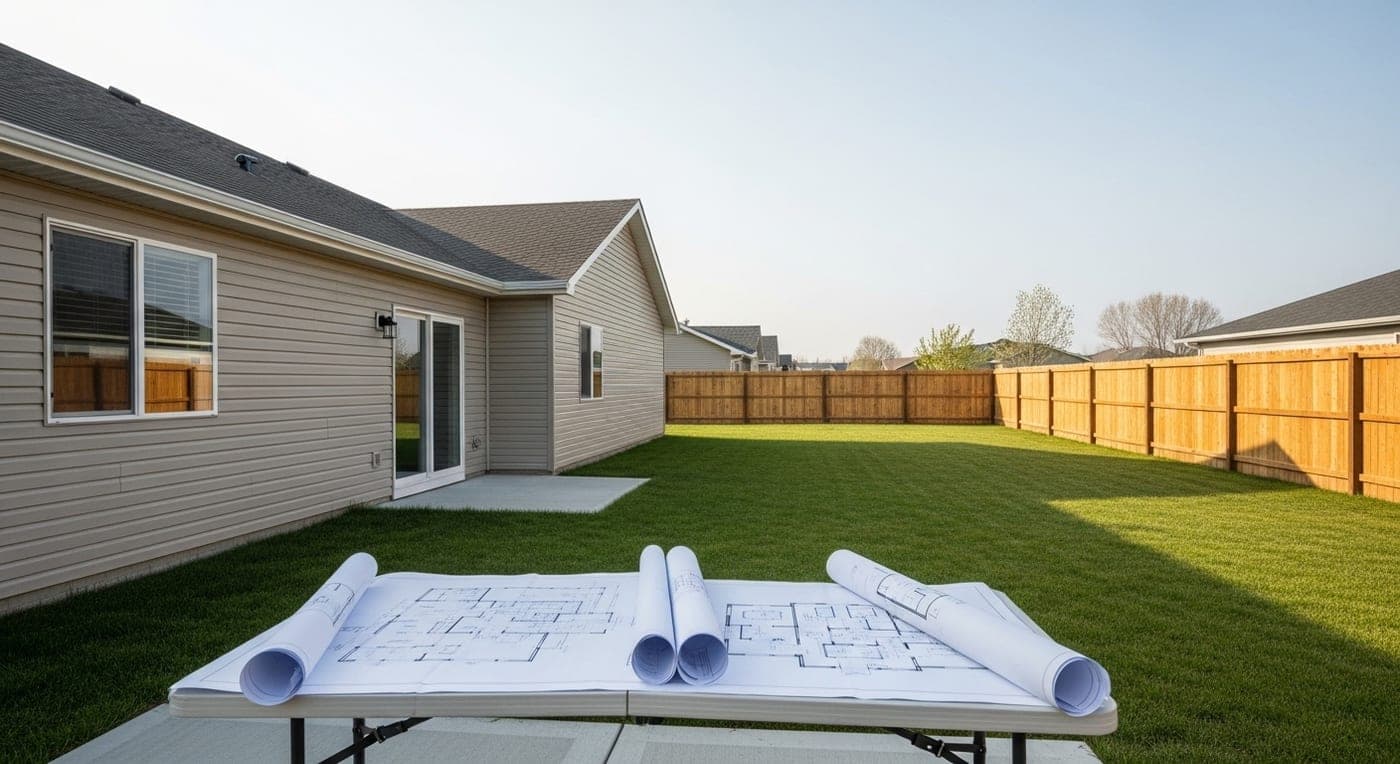
Regardless of which direction you are leaning, do not skip the feasibility check. A professional review of your lot, zoning classification, and utility situation before you invest in design can save you thousands in redesign costs and months of frustration.
Comparing Financing Options
The financing landscape for additions and ADUs is different, and the difference works in the ADU's favor.
A home addition is typically financed through a HELOC, home equity loan, or cash-out refinance. You borrow against your existing equity, build the addition, and your home value goes up somewhat. The debt stays regardless of whether the addition generates any income.
An ADU opens up additional options. Fannie Mae allows renovation loans to finance ADU construction on one-unit properties. Freddie Mac's CHOICERenovation mortgage serves a similar function. The FHA now allows lenders to count ADU rental income during underwriting, with up to 75 percent countable for existing ADUs and 50 percent for planned new units. That means the ADU's income potential can actually help you qualify for the loan to build it, which is something an addition can never do.
Getting the right financing structure matters as much as getting the right design. The wrong loan product can stall a good project.
Ready to Find Out What Your Property Can Support?
Whether you are leaning toward an addition or an ADU, the first step is the same: find out what your specific lot, zoning, and utility situation actually allow. Twin Falls ADU Guys offers a free Readiness Call that takes 10 to 15 minutes. We will ask about your property, your goals, and your timeline, and give you an honest answer about what is realistic.
We also offer a more detailed feasibility check covering zoning, setbacks, utility access, lot coverage, and budget expectations. We work with homeowners across Twin Falls, Jerome, Burley, Rupert, Filer, Buhl, Kimberly, Gooding, and Hagerman.
You can schedule your Readiness Call at twinfallsaduguys.com or call us directly at (208) 613-9830.
Frequently Asked Questions
Can I build an ADU on my Jerome property if I already have a large home addition?
Possibly. What matters most is your remaining lot coverage, setbacks, and whether your zoning classification allows ADUs. Jerome city and county have different rules, and the city updated its ADU ordinance in 2025, so confirm current requirements with the Jerome Planning and Zoning office before assuming anything.
Will an ADU raise my property taxes in Idaho?
Adding any structure to your property typically increases its assessed value, which can affect your property taxes. However, the rental income an ADU generates usually offsets this cost many times over. We recommend speaking with a local tax professional about your specific situation before making a final decision.
How long does it take to build an ADU compared to a home addition?
Both projects vary based on size, design complexity, and permitting timelines. A straightforward addition might take four to six months from permit approval to completion. A site-built ADU often runs six to ten months. Prefabricated ADU units can shorten that timeline significantly, sometimes reaching move-in ready in four to six months total.
What is the minimum lot size for an ADU in Cassia County?
In unincorporated Cassia County, the minimum lot area for any dwelling unit is one acre. Inside Burley city limits, different zoning rules apply. Contact the Cassia County Building Department or the City of Burley to confirm requirements for your specific parcel.
Can I rent out an ADU in the Magic Valley?
Yes, in most cases. Idaho is generally ADU-friendly, and long-term rentals are permitted in most residential zones that allow ADUs. Short-term rental platforms like Airbnb or VRBO may have additional local licensing requirements depending on your municipality. Verify with your city or county before listing.
Is a prefab ADU a good option for a Jerome or Burley property?
For many Magic Valley homeowners, prefab units offer a strong combination of cost predictability, faster timelines, and solid quality. They are not the right fit for every lot or every goal, but they deserve serious consideration, especially when budget and speed are priorities. The key is confirming that site conditions (access, utility connections, foundation requirements) support a prefab installation before you commit.
Twin Falls ADU Guys Team
Twin Falls ADU Guys